
Time Shooter 2
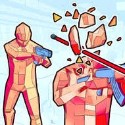








You plant your feet and the room freezes. A gunman two steps away has his arm halfway up, his bullet hanging motionless in the air, and you have exactly as long as you choose to stand still to decide where to put your next shot. That pause-and-plan rhythm is the entire reason Time Shooter 2 plays nothing like a normal shooting game, even though the setup sounds simple.
Time Only Moves When You Do
The core rule in Time Shooter 2 is blunt: time runs at full speed while you are moving and slows to a crawl the instant you stop. Stand still and incoming bullets practically hang in place, giving you a window to line up a headshot or step sideways out of a bullet's path. Sprint forward and everything snaps back to real speed, including the gunmen reacting to your position.
This single mechanic turns every room into a puzzle of timing rather than reflexes alone. Players quickly learn that holding still too long in the open is still dangerous, since enemies keep adjusting their aim even in slow motion, just more gradually. The tension comes from knowing exactly how long you can afford to stand frozen before moving again becomes the safer option.
Weapon pickups scattered through each stage force constant decisions about trading a nearly empty pistol for a shotgun lying near a cluster of enemies, often while time is still crawling around you. A melee weapon option adds a riskier, close range alternative for stages where ammo runs short, rewarding players willing to close distance during a slowed-down moment instead of only shooting from range.
Stage Design in Time Shooter 2's Escalating Rooms
Time Shooter 2 strings together dozens of short stages, each a single room or small cluster of rooms filled with armed enemies positioned to punish careless movement. Early stages give you one or two gunmen and open sightlines, letting you learn the stop-to-slow-time rhythm without much pressure.
Later stages pack in more enemies per room and tighter cover, so the bullet-time mechanic in Time Shooter 2 stops being a convenience and becomes mandatory. A single stage can demand clearing four or five armed opponents in a space barely large enough to sidestep in, which is where most new players discover how punishing a mistimed sprint can be.
The difficulty curve leans on enemy placement rather than enemy health, so fights stay fast. You rarely spend more than a few real-time seconds in control before a stage ends, win or lose, which keeps Time Shooter 2 feeling like a string of tight puzzles instead of a long shootout.
What Beginners Get Wrong
New players tend to treat the slow-motion effect as a full pause and stand frozen far too long, not realizing enemies are still inching their aim toward a fixed target. Standing in open sightlines while slow time ticks away is one of the fastest ways to take a bullet in Time Shooter 2.
The fix most players land on is short bursts of movement between brief stops, rather than one long stationary read of the room.
Frequently Asked Questions
How does the slow motion actually work in Time Shooter 2?
Time only slows down while your character is standing still; the moment you move in any direction, the game returns to normal speed, including enemy reactions and bullet travel.
Can you switch weapons mid-level?
Yes, picking up a new weapon swaps out whatever you are carrying, and a melee option is available for close-quarters stages when ammo runs out.
Does standing still make you completely safe?
No, enemies keep adjusting their aim even in slow motion, just more gradually, so standing in one spot for too long still gets you hit.
Time Shooter 2 gets its identity from forcing you to treat stillness as a resource instead of a safety net. Every gunman you drop while frozen mid-stride is proof that the stop-and-slow rhythm, not raw aim, is what actually gets you through its rooms.