
Bubble Shooter








Bubble Shooter: Finding the Best Way Through the Board
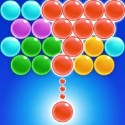
Bubble Shooter looks straightforward when the game begins: a launcher is placed underneath a field of colored bubbles, and the player controls the next shot. The difficulty gradually comes from the shape of the formation and the limited routes available for reaching useful targets.
Instead of treating every move as a simple color match, it helps to think about how a shot will change the rest of the board. Removing one section can expose another, while breaking an important connection can make an entire group fall away.
| Type | Input | Goal |
|---|---|---|
| Puzzle | Mouse or touchscreen aiming | Remove groups of matching bubbles and clear the formation |
Look for Connections, Not Just Matches
The most obvious move is usually to fire at a nearby group of the same color. That can clear a few bubbles, but it is not always the most valuable target.
Some sections of the board are effectively suspended from a smaller number of connecting bubbles. If those supporting pieces are removed, everything attached below them can lose its connection and drop at the same time.
This creates opportunities for much larger clears. Instead of asking which color can be matched immediately, it can be more useful to identify which part of the formation is holding other bubbles in place.
A single successful shot can therefore have two effects: it can complete a color combination and also remove the structure supporting another group. Recognizing these situations becomes increasingly useful on crowded boards.
Getting Around Obstacles
Not every useful target can be reached with a direct shot. Bubbles positioned in front of the desired group can block the obvious route, but the side walls provide another option.
By aiming toward a wall, the projectile can rebound and travel into the board from a different angle. This makes it possible to approach areas that are inaccessible with a straight trajectory.
Wall shots require some practice because a small change in the starting angle can alter where the bubble lands. Once the rebound is easier to predict, however, the sides of the screen become part of the aiming system rather than simply boundaries.
There Is a Cost to Waiting
Taking extra time to examine the board can be useful, but many versions of Bubble Shooter introduce additional pressure when the player makes too little progress. The formation can move downward, leaving less room between the bubbles and the launcher.
A lower formation reduces the margin for error. Shots have less space to develop, and an unsuccessful move can make the following positions harder to manage.
This gives the game a useful balance between accuracy and momentum. Looking for a strong move is worthwhile, but endlessly waiting for an ideal opportunity can create a different problem.
Think About the Following Bubble
Good shots do not always produce an immediate large clear. Sometimes the best move is the one that prepares the board for what comes next.
If the next bubble is visible, it can influence the decision you make with the current one. You might remove an obstacle, open a passage, or expose a matching group so that the following bubble can be used more effectively.
This turns the puzzle into something slightly more strategic. Instead of evaluating only the bubble in the launcher, you can consider a short sequence and decide whether the current move improves the position for the next one.
Managing a Crowded Formation
As more bubbles remain on the board, several possible targets may compete for attention. A quick match may be available in one area, while another section contains the opportunity for a much larger collapse.
Checking how groups are connected can help distinguish between these options. A move that removes only a handful of bubbles may be less useful than one that eliminates the support beneath an entire section of the formation.
Likewise, a difficult-looking target may become accessible after one carefully selected shot. This is where accurate aiming and patience become more valuable than simply firing at the closest matching color.
A Simple Game With Room for Precision
Bubble Shooter keeps its controls easy to learn, but the board creates enough variables to make individual shots worth thinking about. Color combinations, falling groups, wall rebounds, and upcoming bubbles all influence the best move.
The appeal comes from turning a seemingly blocked position into a workable one. Finding the right angle, removing a key connection, and watching a large section of the formation disappear gives the simple shooting mechanic considerably more depth than its basic rules suggest.