
Ragdoll Hit
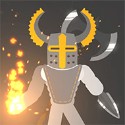
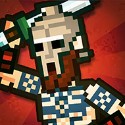

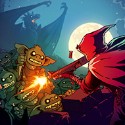
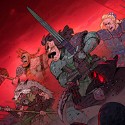
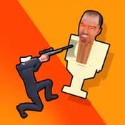
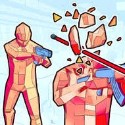


In Ragdoll Hit you start every match with a stickman body that doesn't fully obey you, limbs swinging on physics rather than fixed animations, which matters because the condition you start a round in, loose-jointed and momentum-driven, shapes every fight that follows.
Physics, Not Animation, in Ragdoll Hit
The defining trait of Ragdoll Hit is that your stickman reacts to gravity, momentum, and collisions instead of playing out scripted hit animations. A punch that lands clean can send an opponent tumbling in a way that looks nothing like the last identical punch, since the physics simulation, not a canned animation, decides how the ragdoll body actually responds.
Momentum carry is the single most important thing to understand in Ragdoll Hit, since a stickman knocked off a platform doesn't just fall, it keeps whatever velocity it had, which means a glancing hit near an edge can be just as effective as a solid one in the center of the arena.
This physics-first approach means two seemingly identical attacks in Ragdoll Hit can produce wildly different outcomes depending on exact positioning and prior momentum, which is a point of real debate among players, some find it thrillingly unpredictable, others find it frustrating when a clean-looking hit doesn't land the way it should.
Single-Player Modes: Boxing, Tug-of-War, and Sword Fighting
Ragdoll Hit's Single-Player mode isn't one continuous mode but three distinct challenge types. Boxing keeps the ragdoll physics but strips it down to a straightforward striking contest, tug-of-war turns the same loose-limbed body mechanics into a constant push-pull of momentum between two stickmen, and sword fighting adds weapon reach and timing on top of the base physics.
Switching between these three Single-Player formats in Ragdoll Hit forces a real adjustment each time, since the momentum habits that work in boxing can actively work against you in tug-of-war, where overcommitting your stickman's weight in one direction is a liability rather than an advantage.
PvP on One Keyboard
Ragdoll Hit's PvP mode is built for two players sharing a single keyboard, turning 1v1 duels into as much a test of split-second timing against another person as the single-player modes are against the physics engine itself. Grabbing a friend for PvP changes the tone of Ragdoll Hit noticeably, since a human opponent reacts to feints and baits in ways the earlier modes don't really require.
Boss Fights and Weapon Variety
Extreme boss fights in Ragdoll Hit scale up both the opponent's size and the punishment for mistimed hits, and the game's wide weapon selection becomes more relevant here than in standard matches, since certain weapons handle a boss's longer reach or heavier knockback better than others. Skins layered on top of this don't change the underlying physics, so weapon choice, not cosmetic skin, is what actually shifts boss fight strategy in Ragdoll Hit.
Why do identical-looking hits sometimes produce different results in Ragdoll Hit?
Because the game simulates momentum and collision in real time rather than relying on fixed animations, so a stickman's existing velocity and exact body position change the outcome of even a visually similar attack.
Which Single-Player mode is the best starting point for new players?
Boxing is generally the most approachable entry point, since it keeps the core physics but limits the extra momentum complexity that tug-of-war and sword fighting add on top of it.
Ragdoll Hit stays interesting precisely because the physics engine, not a fixed move list, decides how every punch, sword swing, and tug-of-war pull actually plays out, and that unpredictability is still what gets argued about most in its boss fights and PvP duels alike.